
1000 TPS LLMs and the Phone Agent Era: What Speed Really Changes
What MiMo UltraSpeed and 1000 TPS LLMs prove about fast inference, long AI-agent tasks, and why FoneClaw still needs supported Android actions.
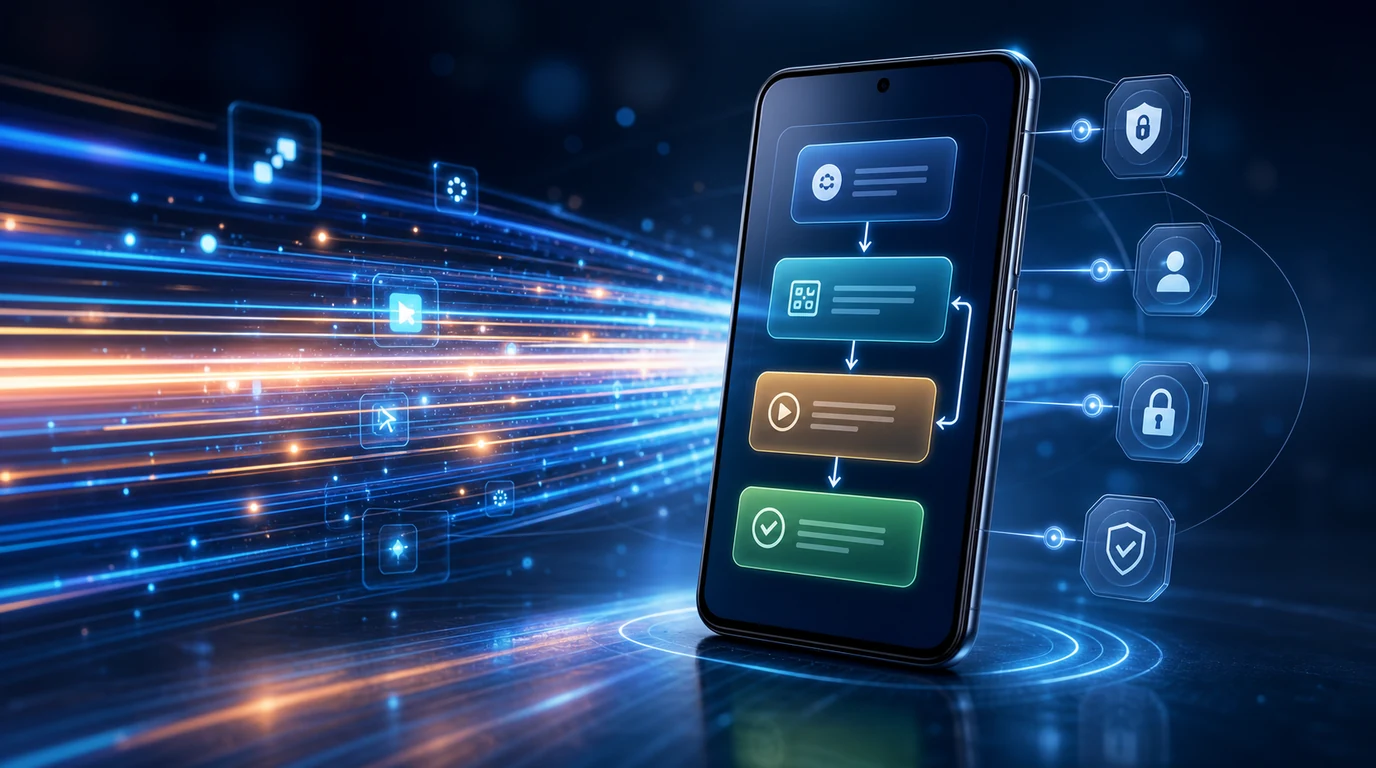
- 1000 TPS LLMs for phone agents are a speed signal, not a complete phone-agent product by themselves.
- Xiaomi's MiMo V2.5 Pro UltraSpeed claims show why fast inference can reduce waiting in plan, act, and check loops, but those claims should be treated as Xiaomi's official figures rather than independent benchmark proof.
- FoneClaw has obtained internal test access to MiMo V2.5 Pro UltraSpeed and is using the 1T-class, peak-1000-TPS speed layer to make supported Android actions feel more responsive.
Speed Is Not the Whole Phone Agent
The practical question behind 1000 TPS LLMs for phone agents is simple: if a model can generate tokens extremely fast, does that make a phone agent feel real-time? The answer is partly yes, but only at one layer of the system. Faster inference reduces waiting. It can make the assistant respond sooner, revise plans faster, and keep a conversation from feeling stuck. It does not by itself grant app access, Android permissions, reliable tool use, or safe completion of phone actions.
Phone-agent work is not just answer generation. A useful assistant may need to understand the user's request, inspect visible context, decide whether the task is supported, ask a clarifying question, prepare an action, show the result, wait for confirmation, and then hand off to an app or Android surface. In that chain, model speed helps the reasoning moments. It does not replace the execution moments.
That distinction is important for Android users. If you ask for help with message triage, route planning, reminder setup, screenshot context, or notification cleanup, fast inference can reduce friction between each step. But the phone still has to respect permissions, app behavior, sensitive actions, and user approval. A model that writes quickly still needs a safe path to act.
At FoneClaw, we treat model speed as upstream capability. We care about fast inference for AI agents because it can make supported phone workflows feel more responsive. Our product focus remains the Android side: supported actions, visible outcomes, and reliable handoff. For deeper background on that device-side work, the Android phone-agent execution layer explains the adjacent mechanics without turning model speed into the whole story.
What MiMo UltraSpeed Proves and What It Does Not
Xiaomi's MiMo V2.5 Pro UltraSpeed is a useful market signal because it puts a concrete number on the speed conversation. On Xiaomi's MiMo official page, verified on 2026-07-15, Xiaomi describes MiMo-V2.5-Pro-UltraSpeed as an UltraSpeed experience mode of MiMo-V2.5-Pro, a 1T flagship model. Xiaomi claims the mode reaches a highest inference speed breaking 1000 tokens per second and lists output TPS around 500 to 1000, compared with 50 to 100 for MiMo-V2.5-Pro.
The same official page presents the model as supporting text input and output, tool calling, streaming, and cache support. Xiaomi also lists scenarios such as quantitative trading, real-time risk control, scientific research, and real-time coding assistance. Those are the right kinds of scenarios to associate with speed: tasks where the user or system cannot wait through slow generation every time a new decision is needed.
Those facts matter, but they should be read carefully. Xiaomi's numbers are Xiaomi's official claims, not an independent benchmark study. They do not prove that every agent product will feel real-time. They do not prove that every phone can run the same speed. They do not prove that a model can safely complete app actions just because it can produce text faster. A 1000 TPS signal is impressive, but it is still only a signal about inference speed under the described conditions.
For model selection, speed should sit beside reasoning quality, tool-use reliability, context handling, safety handoff, and cost. Our AI agent model capability guide covers that broader model-capability question. Here, the narrower lesson is that ultra-fast output changes how an agent can behave between steps, while the phone-action layer still has to decide what can actually happen on the device.
Why Latency Matters More in Long Phone Tasks
Latency becomes more important when a task is not a single answer. A one-shot question can tolerate a little delay. A long phone-agent task cannot. If a user asks an assistant to clean up notifications, prepare replies, check calendar conflicts, open directions, and create a reminder, every reasoning pause adds up. The user is not waiting once. The user is waiting at each plan, action, review, and correction point.
Imagine a message triage flow. The assistant reads the visible thread, identifies the likely intent, drafts a reply, asks whether the tone is right, updates the draft, and waits before sending or handing off. If each model step is slow, the workflow feels heavier than doing it manually. If the reasoning steps are fast, the user can stay in the loop without losing patience. That is where fast inference for AI agents starts to matter.
The same applies to route checking and calendar planning. A phone agent may need to compare an address, check timing, notice a conflict, suggest a route, and then open the relevant app. In a slow system, every adjustment feels like another wait. In a faster system, the agent can keep the interaction fluid enough for the user to correct it naturally. Real-time phone agent behavior depends as much on those small loops as on the first response.
Still, faster does not automatically make safer by default. A wrong answer delivered instantly is still wrong. A fast unsupported action is still unsupported. A quick plan that skips confirmation can be worse than a slower plan that keeps the user aware. The useful speed improvement is not simply more tokens per second. It is a tighter loop between intent, plan, check, and supported action.
The Fast Model and Slow Model Loop
One useful way to think about phone-agent architecture is a fast model and slow model loop. A lightweight or faster model can handle quick checks, short rewrites, simple classifications, and immediate conversational turns. A deeper model can be used for harder reasoning, ambiguous intent, complex planning, or higher-risk decisions. This is a design pattern, not a claim about any specific FoneClaw internal architecture.
The pattern matters because not every step needs the same amount of intelligence. If the user says, 'make that reply shorter,' the assistant should not need a heavy reasoning pass. If the user asks whether a message conflicts with a calendar event and whether to propose a new time, the system may need deeper reasoning and clearer confirmation. A real-time phone agent benefits when quick steps stay quick and complex steps get the attention they deserve.
Fast and slow models also change conversation latency. A fast model can keep the interaction alive while deeper processing happens behind the scenes or after the user confirms direction. That can make long tasks feel less brittle. The assistant can acknowledge, summarize, ask a short question, or prepare a safe preview while reserving deeper analysis for the steps that actually need it.
Raw TPS alone does not define this architecture. Streaming, caching, context reuse, tool-call reliability, prompt design, action planning, and device-side constraints all affect the experience. A 1000 TPS class model can make the loop much more comfortable, but the product still has to decide when speed is enough and when caution is more important. For phone agents, the right loop is fast where the task is low risk and careful where the next step affects the user's data, accounts, or device state.
Why Phone Actions Still Need an Execution Layer
Reasoning and execution are different jobs. A fast model can infer that the user wants to reply to a message, save a reminder, open a map, change a setting, or act on a notification. The phone still has to perform the action through supported surfaces. That means Android permissions, app states, visibility, user confirmation, and failure handling all remain part of the product.
This is where model-speed hype can mislead. Tool calling latency matters, but a tool call is only useful if the tool is allowed, scoped, and connected to a safe result. Opening a navigation app is different from selecting a route. Drafting a message is different from sending it. Finding a setting is different from changing it. Preparing a calendar entry is different from committing it without review. The faster the agent moves, the more clearly those boundaries need to be shown.
At FoneClaw, we focus on supported Android phone actions. FoneClaw focuses on supported Android phone actions with visible results, permission-aware flows, user confirmation, and practical fallback. If the action is supported, the assistant can help move the task forward. If the action is sensitive, the user should see and confirm it. If the phone or app blocks the path, a good assistant should hand off, ask, or stop instead of pretending the work is complete.
The broader device context is also important. A phone carries sensors, notifications, app surfaces, permissions, and personal context. The AI phone carrier layer is the wider strategic frame, while the Android phone-agent execution layer covers the practical mechanics. This page stays on the latency implication: faster reasoning makes the action layer more valuable, not less necessary.
How We Use the Speed Lesson at FoneClaw
At FoneClaw, our lesson from 1000 TPS and MiMo V2.5 Pro UltraSpeed is not that a single fast model becomes the whole phone agent. Our lesson is that faster upstream reasoning can make supported phone workflows feel more natural. When the model can understand, revise, and respond quickly, the user is more willing to stay in the loop. That is useful only if the phone-action side is designed with the same care.
There is also a practical FoneClaw angle now. FoneClaw has obtained internal test access to MiMo V2.5 Pro UltraSpeed, and we are using this 1T-class model, with Xiaomi's claimed peak speed beyond 1000 TPS, to improve the FoneClaw experience. In phone-agent workflows, the benefit is not abstract speed: it is quicker understanding, faster revision, and more responsive execution of supported phone actions when the user is moving through a real task.
We see faster models as a stronger reasoning layer above the product work we actually own. Our role is to turn intent into supported Android phone steps where the result is visible and permission-aware. If the assistant prepares a reply, the user should know what it will say. If it opens a route, the destination should be clear. If it reaches a settings handoff, the user should understand what will change before anything sensitive happens.
We also treat speed as a reason to be more disciplined, not less. A slow agent can frustrate users. A fast but careless agent can damage trust. The right product behavior is fast enough to keep momentum and bounded enough to keep control. That means supported actions, confirmation points, and fallback remain core even as inference gets faster.
The practical takeaway for readers is this: 1000 TPS LLMs for phone agents can reduce waiting and improve long task flow, especially in plan, act, and check loops. They do not replace Android permissions, app support, visible confirmations, or device-side execution. At FoneClaw, we welcome faster models because they make the upstream reasoning better. We still build for the part users actually depend on: reliable supported Android actions with clear boundaries.