
AI Phones as the Carrier Layer for Phone Agents, With Meydo C1 as a Current Case
Why AI phones matter for practical agents: context, permissions, app handoff, hardware, visible confirmation, and the current Meydo C1 distribution case for FoneClaw.
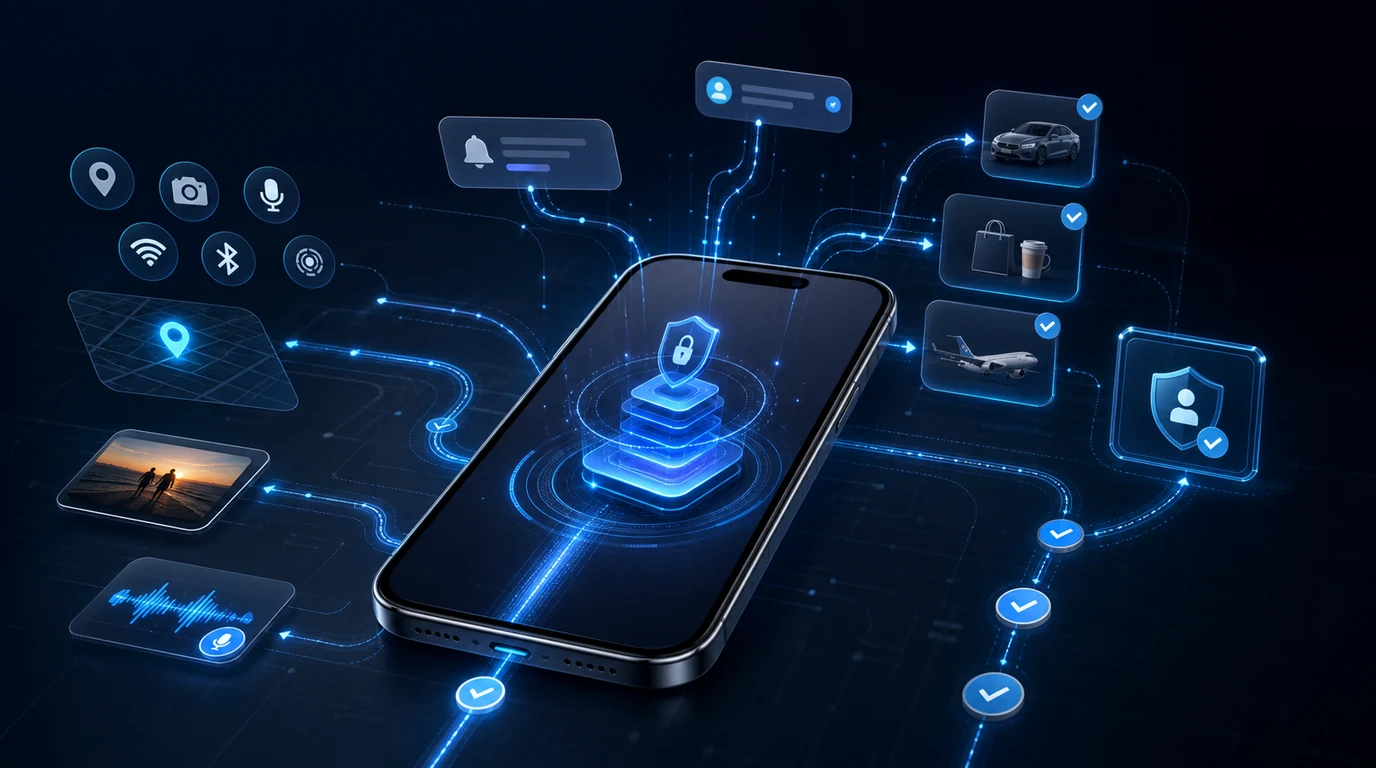
- AI phones become meaningful when they connect personal context, OS permissions, app handoff, visible confirmation, and recovery, not simply when they run a stronger model.
- The phone is the carrier layer for agents because it already holds identity, sensors, connectivity, app state, permissions, and the user's review surface.
- Meydo C1 is one current distribution case: Meydo C1 is the hardware, DroiClaw is the main system, and FoneClaw is preinstalled as a system application.
- FoneClaw focuses on supported Android workflows with 100+ built-in tools, visible execution, applicable approvals, stop controls, and recovery when phone state changes.
The Phone as an Agent Carrier Layer
AI phones matter because the phone is where an agent can meet real daily context. A model can reason from almost anywhere, but the phone already carries the user's identity, contacts, messages, camera, notifications, location when allowed, app sessions, device settings, and review screen. That combination makes the phone a carrier layer for agents: the place where intent, context, permissions, supported tools, and visible confirmation can come together.
This carrier role is practical, not mystical. A person may ask for a reply, a route, a reminder, a setting change, or a summary of new information. The agent needs more than a good answer. It needs the current phone state, a supported action path, the right permission boundary, and a way for the user to inspect what will happen. The phone already provides many of those surfaces because it is the device people use for communication, accounts, and recovery.
From building FoneClaw, we have learned that the hard part is the handoff from reasoning to action. A useful phone agent has to know when to read context, when to ask, when to prepare, when to pause, and when to recover. That is why we define the AI-phone trend through the action loop rather than through hardware claims alone. For the broader definition of that loop, Agentic AI Phone Meaning: Context, Actions, Controls, and FoneClaw explains how context, planning, capability routing, approval, and recovery separate agentic behavior from a normal AI feature.
Model, Runtime, Tools, System, and Hardware
The carrier-layer view becomes clearer when the stack is separated. A model provides reasoning and language understanding. An agent runtime manages task state, context, routing, tool selection, result handling, and recovery. Tools provide bounded execution paths. The main system supplies device services, permission rules, background behavior, hardware access, and update channels. Hardware supplies the physical inputs, display, camera, radio, battery, and sensors that make the experience reachable in daily life.
Those layers can come from different providers and still work together when responsibilities are clear. A stronger model can improve planning and language understanding. A better runtime can make task state and recovery easier to follow. Better tools can expose supported actions with clearer inputs and outputs. A more integrated system can reduce setup friction. Dedicated hardware can make wake, capture, review, and battery behavior feel more intentional.
The important engineering lesson is that each layer solves a different problem. Hardware can improve responsiveness, battery use, and local processing. The main system can make agent surfaces easier to reach. The runtime can decide how a request becomes a supported action. Tools can define what execution is possible. Permissions and approvals decide what should happen for the current user and task.
FoneClaw sits in the agent-runtime and governed-tool part of this stack. A configured model reasons through the request, while FoneClaw handles supported Android workflows through visible execution, applicable approvals, stopping, result checks, and permission recovery. For the detailed path from user intent to action, AI Agent Phone Control on Android: Intent, Confirmation, Action gives the current Android execution model.
Meydo C1 as a Current Distribution Case
Meydo C1 is a useful current case because it shows how the carrier-layer idea can appear in dedicated hardware without collapsing every layer into one brand. The current architecture is precise: Meydo C1 is the hardware, DroiClaw is the main system, and FoneClaw is preinstalled as a system application. That makes C1 a distribution and integration case for FoneClaw, while the main system and hardware remain Meydo's device stack.
The hardware choices support the interaction direction. Meydo C1 is positioned as a compact pocket AI phone with a dedicated AI key, a small square display, and a flip camera. Those elements can make agent access faster, visual context easier to capture, and review more compact. They also show why the phone itself matters as a carrier: a device shape can make an agent easier to reach during short, frequent moments.
The software boundary still matters. FoneClaw's preinstalled system-application role can reduce setup friction and make supported FoneClaw workflows easier to find on the device. DroiClaw remains the C1 main system. Accounts, connectivity, permissions, model configuration, supported services, and reviewable actions still determine the live user experience. That is the right way to evaluate current AI-phone cases: hardware can create a better carrier, while the agent layer still needs supported execution and user control.
For readers who want C1 specifications, preorder checks, shipping considerations, accessories, and the full three-layer product explanation, Meydo C1 AI Agent Phone: Hardware, DroiClaw, FoneClaw App, Specs, and Preorder Checks is the canonical product page. This article uses C1 only as one current carrier-layer example.
Identity and Task State Across Supported Contexts
A phone becomes a strong agent carrier when it can carry identity and task state across supported contexts. A request rarely belongs to one isolated screen. A message may become a calendar item. A visible address may become a navigation step. A notification may become a memo. A screenshot may become a follow-up question. The carrier layer has to preserve enough state for the next step while keeping the destination, permission, and result clear.
Useful handoff has several parts. The source context should be explicit: the user said something, attached a current screen, selected an image, opened a notification, or referenced an account. The destination should be clear: a calendar, memo, message draft, map route, device setting, or supported workflow. The permission state should be understandable before the action depends on it. The result should be visible enough for the user to verify or correct.
That handoff standard applies across devices as well. A compact AI phone, an existing smartphone, a wearable, and a desktop service may each carry part of a task, but shared state should be intentional. Automatic state sharing across every service creates confusion. The better pattern is scoped transfer: carry the relevant task state, show the destination, keep meaningful actions reviewable, and provide recovery when the next device or service is unavailable.
For the deeper architecture of handoff, Secure Cross-Device AI Agent Handoff: State, Approval, and Recovery explains why state, approval, and recovery need to travel together. That is the same principle we apply inside FoneClaw when a supported Android workflow moves from intent to execution.
Approvals, Stop Controls, and Auditability
The carrier layer earns trust by making consequential actions visible. If an agent prepares a draft, changes a setting, opens a route, creates a reminder, shares data, or interacts with an account, the user should be able to see the target, the payload, the permission need, and the expected result at the right moment. Confirmation is part of the product design, not a slowdown added after the fact.
Stop controls matter for the same reason. Real phone state changes while a task is running: an app updates, a permission is missing, a network drops, an account changes, or the user changes their mind. A serious phone agent has to stop cleanly, preserve useful task state where appropriate, and show what happened. Recovery is part of control because it gives the user a path forward after a blocked or interrupted workflow.
Auditability gives the user confidence after execution. The product should show enough record of the action, result, failure, or skipped step for the user to understand the outcome. That does not require turning every interaction into a compliance report. It requires plain, inspectable product behavior: what was requested, what was used, what was done, what waited for approval, and what remains unresolved.
FoneClaw's current Android work reflects that standard. We focus on supported workflows with visible progress, applicable approvals, stopping, result checks, and recovery. The companion guide AI Agent Identity, Permissions, and Audit Trails for Phone Tool Governance covers the identity and record layer behind this approach. As the carrier layer becomes more integrated, those controls become more important, not less.
Evaluate Carrier Claims With Real Workflows
The best way to judge an AI-phone carrier claim is to test real workflows on the actual device, account, region, permissions, and services the user plans to use. A good test starts small: one supported task, one interruption, one permission denial, and one recovery path. The result should show whether the product connects context, planning, supported tools, approval, and recovery in a way the user can understand.
Start with a reversible task. Ask the agent to summarize visible information, prepare a memo, draft a message without sending, check a setting state, or create a calendar preview. Then inspect the path. Did the agent use relevant context? Did it choose a supported capability? Did it ask for permission when needed? Did it show what would change? Could the user stop the task? Did the result remain visible after completion?
Repeat the same task with a changed screen or missing permission. That second run often reveals the real carrier layer. A polished first pass may depend on perfect setup. A dependable phone agent explains the block, preserves useful state, and offers a clear next step. That is where hardware, system integration, runtime design, tools, and approvals either work together or separate.
FoneClaw provides 100+ built-in tools for supported Android workflows, and we use that capability as a practical path for testing the carrier-layer idea on supported phones today. Meydo C1 adds a current compact device route with FoneClaw preinstalled as a system application while DroiClaw remains the main system. One case does not define the whole platform shift; it gives buyers and builders a current example to evaluate with the same workflow standard.
Sources: This update uses the pinned current FoneClaw carrier-layer article, Meydo C1 official product information, Meydo's DroiClaw architecture article, and FoneClaw's current Features and Download pages.