
OPPO Alipay AI Agent: Intent Meets Service Execution
How OPPO Xiaobu and Alipay Abao show a phone-agent pattern where intent, service work, authorization, and payment confirmation are separated.
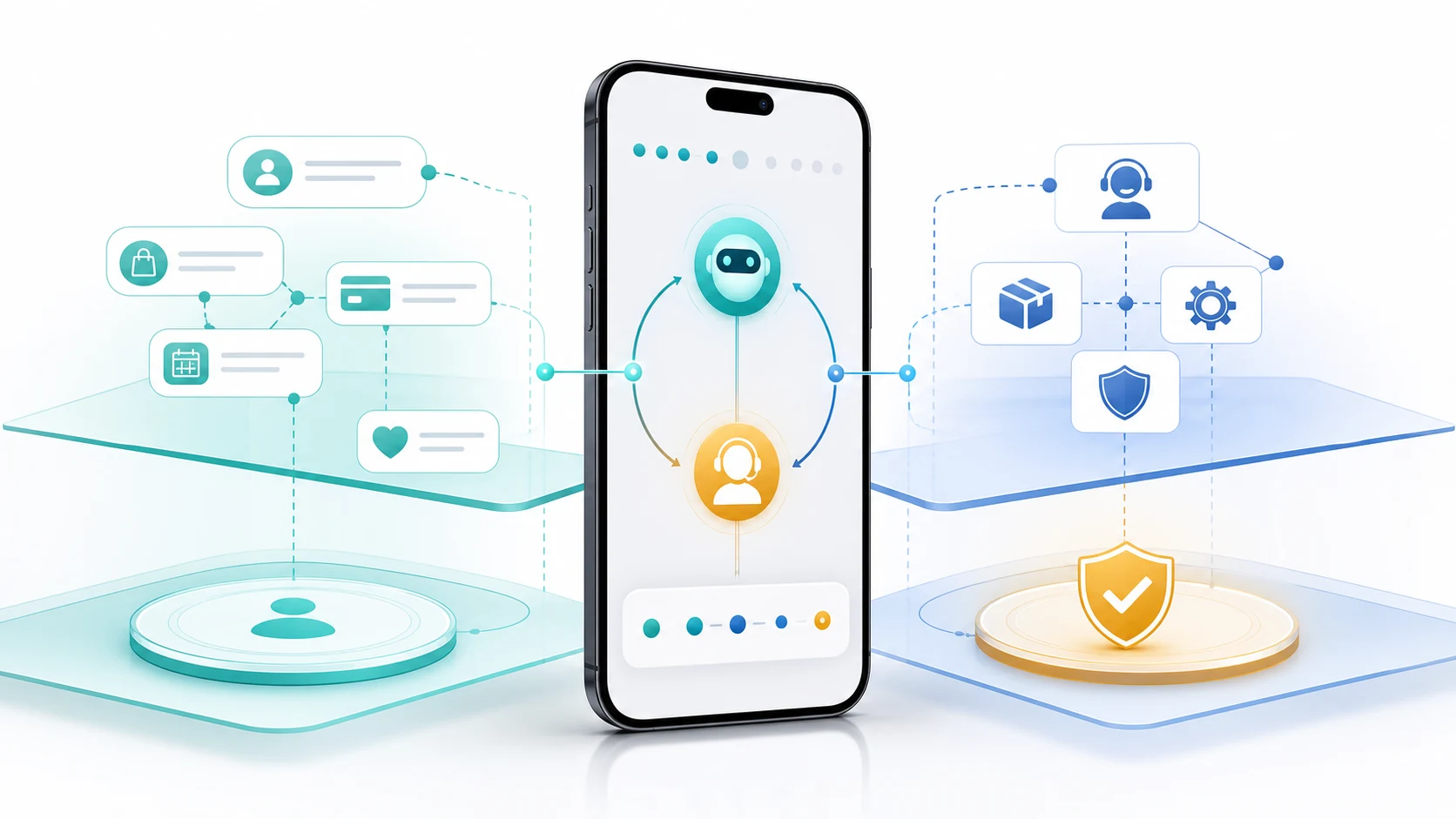
- The OPPO Alipay AI Agent signal matters because it shows phone assistants moving from simple commands into real service workflows across apps and trusted service domains.
- Reports say OPPO Xiaobu can call nearly 200 livelihood and daily-life services from Alipay Abao, with three standardized capabilities: service access, complex task delegation, and safe fulfillment.
- The important design pattern is separation: Xiaobu understands the user’s request, Abao handles service work inside Alipay’s domain, and key authorization, order, and payment steps remain user-confirmed.
- At FoneClaw, we see this as support for our own Android phone-action focus: clear intent, visible next steps, supported actions, confirmation for sensitive moments, and practical recovery when a task needs review.
Why the OPPO-Alipay Signal Matters
The OPPO Alipay AI Agent signal is important because it moves phone-agent cooperation into a real service context. According to the IT之家 report on OPPO and Alipay agent interconnection, AI Alipay Abao and OPPO’s system assistant Xiaobu reached cross-device interconnection, with Xiaobu able to call nearly 200 livelihood and daily-life services from Abao. A later IT之家 follow-up on Abao service access through Xiaobu repeated the core point: users can invoke Abao services through Xiaobu with one sentence.
This is more than a voice shortcut. A normal assistant can open an app or answer a question. A phone agent that reaches into service workflows must understand the user’s request, choose a trusted service path, ask for missing information, show status, and pause for approval when the action affects money, account data, or an order. That is the meaningful shift.
Reports describe three standardized capabilities for the phone scenario: service direct access, complex task delegation, and safe fulfillment. In plain language, the phone entry point can start the task, the service agent can work through domain-specific steps, and the user remains in control of key decisions.
For FoneClaw, the lesson is directly relevant. We build around supported Android phone actions, not abstract conversation. A useful phone agent should reduce app switching, clarify the next step, keep results visible, and ask for user approval at the right moments. The OPPO-Alipay signal shows that this pattern is becoming a serious consumer and service-ecosystem design question.
Intent Understanding and Service Work Need Different Jobs
The most useful part of the OPPO-Alipay model is the division of work. Reports say Xiaobu handles user intent while Abao handles service execution. That separation matters because a phone-system assistant and a domain service agent are good at different jobs.
Xiaobu sits close to the phone experience. It can serve as the entry point, understand the user’s request, and connect the request to the current device context. Abao sits close to Alipay’s service ecosystem. It can organize service-specific flows such as travel, tickets, food, local services, payment-related tasks, and account-connected actions.
The IT之家 report describes Alipay AHA Agent Hub-Access as the collaboration route connecting Xiaobu and Abao with task passing and status return. That matters because a cross-agent workflow needs more than a request. It needs a way to pass intent, run service work, return progress, and show the user what requires a decision.
This pattern also helps explain why machine-callable apps are becoming important. When apps expose clear actions, assistants can call those actions more reliably. Our related article App Intents and Machine-Callable Apps for AI Agents explores that adjacent design shift: apps become easier for agents to work with when their actions, inputs, and results are structured.
The key product idea is simple: intent understanding should not be forced to do every service task, and service execution should not become invisible to the user. The phone assistant and the service agent need a clear working relationship.
What Nearly 200 Services Actually Signals
The reports mention nearly 200 livelihood and life services, with categories including travel, moviegoing, dining, payments, government queries, and local services. They also describe about 18 more complex digital livelihood scenarios, including tasks such as booking, shipping, payment, rental, and food ordering. These counts should be read as a service-ecosystem signal, not a spec sheet.
The important point is breadth across daily life. A phone assistant becomes more useful when it can reach real services: buy a movie ticket, check a public-service item, book a local service, order food, or handle a payment-related task with approval. That is where a phone agent moves from ‘answering’ to ‘getting something done.’
The PChome coverage of OPPO Xiaobu and Alipay Abao also frames the cooperation around agent-to-agent service access. The practical implication is that phone assistants may increasingly rely on specialized service agents rather than trying to build every function into the phone assistant itself.
For users, the most useful question is not how many services appear in a launch claim. The better question is whether the flow is visible, whether the service is recognizable, whether the input is correct, and whether the final action is confirmed. A large service catalog is only valuable when each task has a safe, understandable path.
This is also why AI Agent Phone Control: How Android Phone Agents Turn Intent Into Action is an important adjacent topic for FoneClaw. The user does not experience an ecosystem diagram. The user experiences one request, one sequence of visible steps, and one final decision.
Authorization, Orders, Payments, and Private Data Need Clear Approval
Payments, orders, account data, and private information are where phone-agent design becomes serious. IT之家 reports that in the OPPO-Alipay cooperation, Xiaobu transmits user intent while service operations occur in Abao’s trusted domain, with authorization, ordering, and payment nodes requiring user confirmation. That is the right kind of design pattern for sensitive phone actions.
A phone agent can prepare an order, fill known details, filter options, or open a payment flow. The user should still see the final state before committing. In daily life, small differences matter: the wrong address, wrong time, wrong ticket, wrong contact, or wrong payment method can create real cost.
Approval also builds confidence for service agents. If users can inspect the task, understand the proposed action, and confirm the important step, they can let the assistant do more routine work. If the step is hidden, even a correct result can feel uncomfortable. Trust comes from visibility and the ability to stop or revise.
For app builders, this means sensitive actions should have clean states: review, confirm, cancel, edit, continue. For phone agents, it means the assistant should know when to speed up and when to slow down. For users, it means asking the right question: where does the agent pause before money, account data, identity information, or private content is used?
FoneClaw’s own product thinking follows that direction. For a deeper FoneClaw security-related context, AI Agent Skill Security Needs Phone Permission Checks explains why phone-agent skills need clear checks before they touch sensitive actions.
What This Means for FoneClaw’s Phone-Action Design
At FoneClaw, we see the OPPO-Alipay signal as reinforcement for a product principle we already build around: a phone assistant should turn intent into supported actions, show the result, and keep the user in control of important decisions. A phone agent becomes useful when it reduces app switching without hiding what happened.
Our route is Android phone actions. We help users open the right app, prepare a message draft, organize a reminder, summarize visible notifications, move through a supported multi-step flow, and review an action before it affects another person, private data, or payment. That is the practical middle ground between a chatbot and a fully automated phone.
The OPPO-Alipay cooperation is also a reminder that phone agents may work with many service agents over time. A general assistant may understand the request, but a trusted service domain may complete the detailed work. This division lets each agent stay closer to what it knows: the phone knows the user’s device context; the service agent knows its transaction, account, and fulfillment flow.
For FoneClaw users, the value is not tied to any one service ecosystem. The broader lesson is about design: supported actions, visible status, confirmation for sensitive steps, and practical recovery when the user changes their mind. Those are the standards we apply to Android phone-agent workflows.
Readers comparing alternative Android assistant paths can also read Best MiClaw Alternative for Android: FoneClaw Phone Actions, which explains our broader supported-action route for Android users outside a single OEM-centered path.
Lessons for Builders, Phone Agents, and Users
The OPPO-Alipay example gives builders a practical design checklist. First, separate the entry point from the service domain. The assistant that hears the user should not have to own every service detail. Second, define what gets passed between agents: intent, required fields, progress, errors, and final status. Third, make sensitive points obvious.
For app builders, the lesson is structured access. If a service wants to work with phone agents, it needs clear actions, predictable states, and user review screens. A vague web flow is harder for assistants to handle. A structured service flow can let a phone agent start the task and let the service agent finish it inside its trusted environment.
For phone-agent teams, the lesson is humility and focus. The assistant should understand the user, choose the right service path, keep the status visible, and ask for approval at the right time. It should also give the user a clean way to stop, edit, or return later.
For users, the checklist is straightforward:
- Can the assistant explain which service is doing the work?
- Can you see the current task status?
- Does the service ask before authorization, order placement, or payment?
- Can you edit missing or wrong information before the final step?
- Can the task resume or recover when something changes?
- Does the assistant keep private and account-related actions visible?
The Caixin weekly note on OPPO-Alipay and JD-Tencent agent links places this cooperation alongside other emerging agent-service connections. The larger market direction is clear: phone agents and service agents are learning how to work together. At FoneClaw, we turn that lesson into supported Android action design: visible steps, user confirmation, and workflows that help people get things done safely and clearly.