
Tencent Hunyuan Hy3 for Phone Agents: Model Power vs Android Actions
Tencent Hunyuan Hy3 improves agent reasoning, coding, office, and API distribution, but Android phone-agent workflows still need permissions, visible actions, and user confirmation.
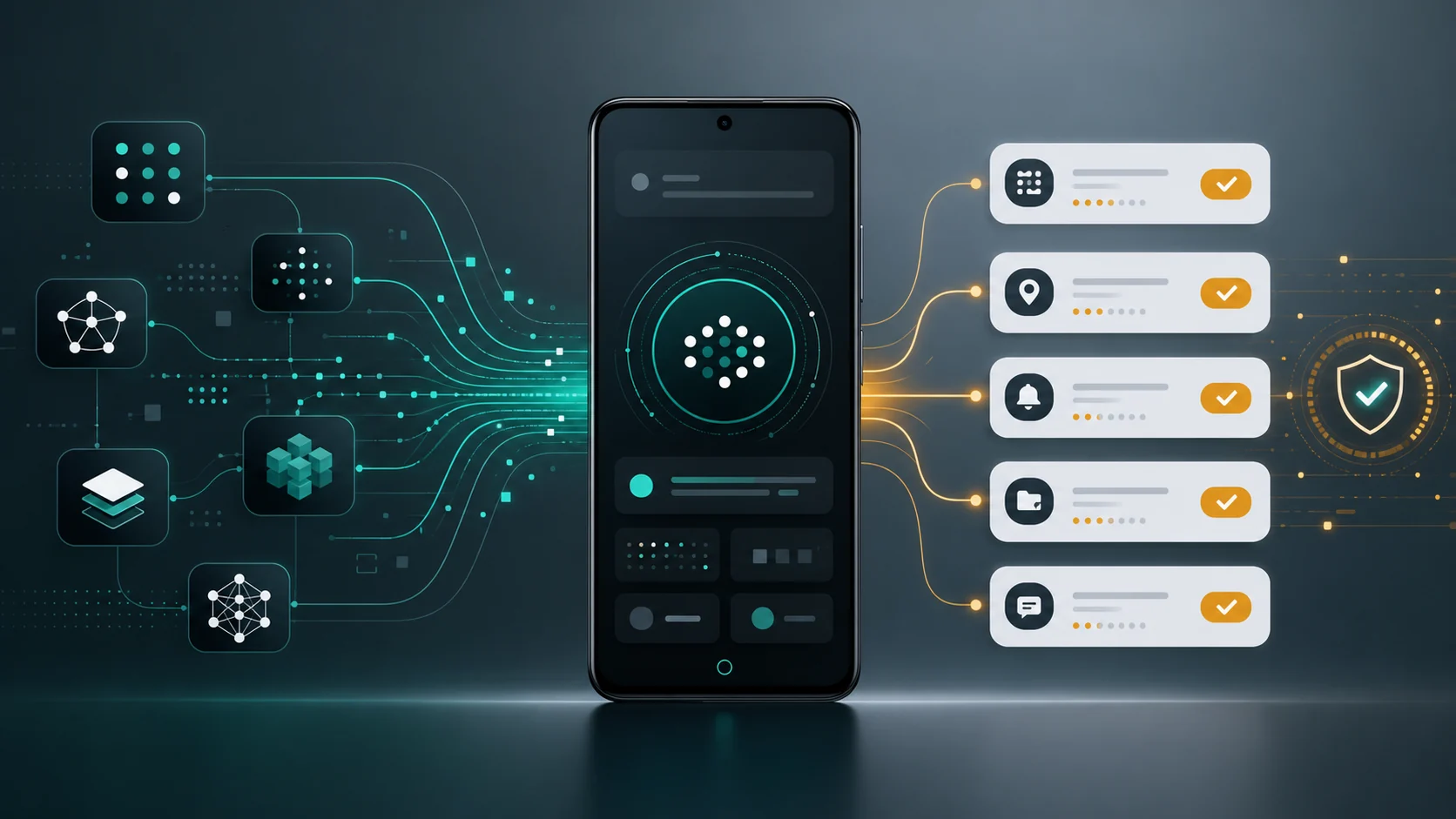
- Tencent Hunyuan Hy3 is a model-side signal for phone agents because it improves reasoning, instruction following, tool planning, office work, coding, and developer distribution.
- Hy3 has been connected to Tencent products including WorkBuddy, CodeBuddy, Yuanbao, Marvis, and ima, while its API distribution runs through Tencent Cloud TokenHub and broader model platforms.
- Model capability helps an agent understand and plan, but Android actions still need supported app paths, device permissions, visible results, and user confirmation.
- FoneClaw uses configurable model reasoning to drive the phone agent, while FoneClaw handles supported Android actions in a visible, permission-aware, confirmable workflow.
Why Hy3 Matters for Phone Agents
Tencent Hunyuan Hy3 phone agent is a useful phrase only if we keep the model and the phone action separate. Hy3 is not a phone-control product by itself. It is a stronger model that can improve reasoning, instruction following, tool planning, office work, coding, and developer workflows. Those improvements matter to phone agents because every useful phone agent starts with understanding what the user wants and planning the next supported step.
On July 6, 2026, Tencent’s official Hunyuan Hy3 release said Hy3 was formally released with stronger agent capability and deeper product integration. Tencent described Hy3 as a model that combines fast responses with deeper reasoning, uses a mixture-of-experts architecture, has 295 billion total parameters with 21 billion active parameters, and supports a 256K context length. The article also says Hy3 improves over the preview version in complex reasoning, instruction following, context learning, code generation, and agent capability.
The phone-agent implication is straightforward. A stronger model can help the agent understand messy requests, remember more context in a session, plan a multi-step task, and choose tools more reliably. But the model does not replace the phone-side action path. When the task becomes “send this message,” “open that app,” “change this setting,” or “call this contact,” Android permissions, visible app state, and user confirmation decide what can actually happen. FoneClaw is built for that action side: configurable models can drive understanding and planning, while FoneClaw handles supported Android actions with visible results and clear approvals.
Model Capability Is Different From Android Action
A model release answers one question: how well can the system reason, follow instructions, use context, generate code, or plan tool use? A phone-agent workflow answers another: can that reasoning become a supported Android action on the user’s device? Hy3 is relevant because it improves the first question. FoneClaw exists to make the second question practical on Android.
Xinhua’s report on Hunyuan Hy3 described the formal launch, the jump from the preview version, the model’s 256K context length, and the product rollout into WorkBuddy, CodeBuddy, Yuanbao, Marvis, and ima. The same report highlighted gains in office production, software development, financial modeling, front-end design, game production, knowledge-base Q&A, and tool coordination. These are valuable for agents because many real tasks need long context, evidence handling, and structured planning.
Phone work adds a separate checklist. The model may decide the user wants to send a WhatsApp update or create a calendar reminder. The phone must still expose the app, identify the contact or field, check permissions, prepare the visible result, and let the user approve sensitive steps. That is why we avoid treating model rankings as a complete phone-agent answer. For broader model selection context, Top AI Agent Models 2026: Capability Guide for Real Agents is the natural adjacent guide; this page focuses on the path from Hy3-style reasoning to Android action responsibility.
Where Hy3 Shows Up: Products, APIs, and Developer Routes
Tencent’s Hy3 signal is also about distribution. The official release says Hy3 has been widely connected to WorkBuddy, CodeBuddy, Yuanbao, Marvis, and ima, with its API available through Tencent Cloud TokenHub and more overseas API platforms planned. It also says Hy3 will reach platforms such as OpenRouter, Hermes, Kilo, Cline, OpenClaw, OpenCode, and Cherry Studio, alongside open model communities such as Hugging Face and ModelScope.
Those names describe product and developer paths, not one single phone-agent product. WorkBuddy and CodeBuddy point toward office and coding use cases. Yuanbao points toward chat and agent features that can deliver documents such as PPT, Word, Excel, PDF, and HTML in the reported office workflow. Marvis points toward file editing, file management, computer diagnosis, and multi-agent collaboration. ima points toward knowledge-base Q&A and agent tasks. TokenHub and OpenRouter-style routes matter to developers because they make the model easier to call from different tools.
This is where readers should be careful with category labels. A model powering WorkBuddy is not the same thing as a model operating Android apps on a personal phone. A developer route through an API is not the same thing as a user-granted phone permission. If you want the WorkBuddy-specific comparison, WorkBuddy vs FoneClaw: Tencent AI Agent vs Android Phone Control covers that adjacent topic. Hy3 belongs in the model and product distribution story; FoneClaw belongs in the Android action workflow for supported phone tasks.
What Still Has to Happen on the Phone
The gap between model reasoning and phone action is where user trust is built. A model can infer that the user wants to message a colleague, summarize a file, find a product, or prepare a task. The phone agent still has to turn that plan into visible Android work: open the right app, choose the right contact or item, use the right permission, prepare the result, and ask before a sensitive action completes.
This is why a Tencent Hunyuan Hy3 phone agent discussion should include permissions. Calls need phone or app calling access. Messages need contact and messaging context. Payments need a clear payment flow and final approval. Settings changes need Android-supported access. Shopping workflows need product, cart, account, address, and payment steps that stay visible. For a shopping-specific adjacent example, AI Shopping Agent: JD, Tencent, and the Phone Control Problem explains why model planning still needs concrete phone-side action controls.
The same principle applies to super-app environments. A model can be strong at intent recognition and service routing, but a user still needs to know what is being opened, ordered, sent, paid, or changed. Our WeChat AI Agent: What a Commandable Super App Could Change article covers the super-app angle in more depth. In FoneClaw, we keep the product scope clear: the configured model drives understanding and planning; FoneClaw performs supported Android actions with visible results, permission-aware flows, confirmation, and practical recovery when the requested action is not supported.
How FoneClaw Uses Configurable Models
At FoneClaw, model choice is part of how the phone agent understands the user. A configurable model can help interpret a messy instruction, plan the next step, compare context, summarize options, and decide which supported Android action should be prepared. FoneClaw remains the environment where supported Android actions happen. That keeps the user experience focused: model intelligence drives planning, and FoneClaw handles the visible phone workflow.
Hy3 is interesting to us because it reflects a broader direction: agents need stronger planning, longer context, better tool use, and more reliable output. InfoQ’s report on Tencent Hunyuan Hy3 highlights the formal launch, open-source licensing under Apache 2.0, TokenHub API availability, overseas platform distribution, and the use of Hy3 in Tencent products such as Yuanbao, WorkBuddy, Marvis, and ima. That is exactly the kind of model-side progress that can improve how a phone agent understands and prepares tasks.
FoneClaw’s Android action design stays consistent across models. The selected model helps drive the agent. FoneClaw shows what is about to happen, uses Android permissions, asks before sensitive steps, and gives a practical next step when the current phone state cannot complete the request. A user asking for “send the update to Alex,” “open the ride app,” or “prepare the reminder from this message” should see the prepared outcome before it affects another person, app, account, or setting. For the broader action mechanics, AI Agent Phone Control: How Android Phone Agents Turn Intent Into Action is the best companion guide.
Checklist: Is a Model Release Enough for Your Phone-Agent Workflow?
A model launch can be exciting, but phone-agent buyers and builders need a practical checklist. Use the table below to separate model strength from Android action readiness.
| Question | What Hy3-style model progress helps | What the phone agent still needs |
|---|---|---|
| Can the agent understand the request? | Reasoning, instruction following, long context, and planning | A clear mapping from intent to a supported Android action |
| Can it use tools? | Better tool selection, coding, office workflow, and agent planning | App-supported actions, permissions, and visible state on the device |
| Can it complete phone work? | Preparation, summarization, decision support, and step planning | User-visible results, confirmation for sensitive steps, and a recovery path |
| Can developers access it? | API routes, open model distribution, and platform availability | Android integration, permission design, and product-level action controls |
For users, the best question is not “Which model is strongest?” It is “Can this model help my phone agent do the work I actually need, in a way I can see and approve?” Hy3 improves the model side of that answer. FoneClaw focuses on the phone side: supported Android actions, visible results, permission-aware flows, confirmation, and practical recovery. When those two sides are separated clearly, a model release becomes useful input for a real phone-agent workflow instead of a vague promise that intelligence alone can operate a phone.