
Apple Intelligence Accessibility vs FoneClaw
Compare Apple Intelligence accessibility features with FoneClaw for Android. FoneClaw provides similar AI-powered voice control for Android users.
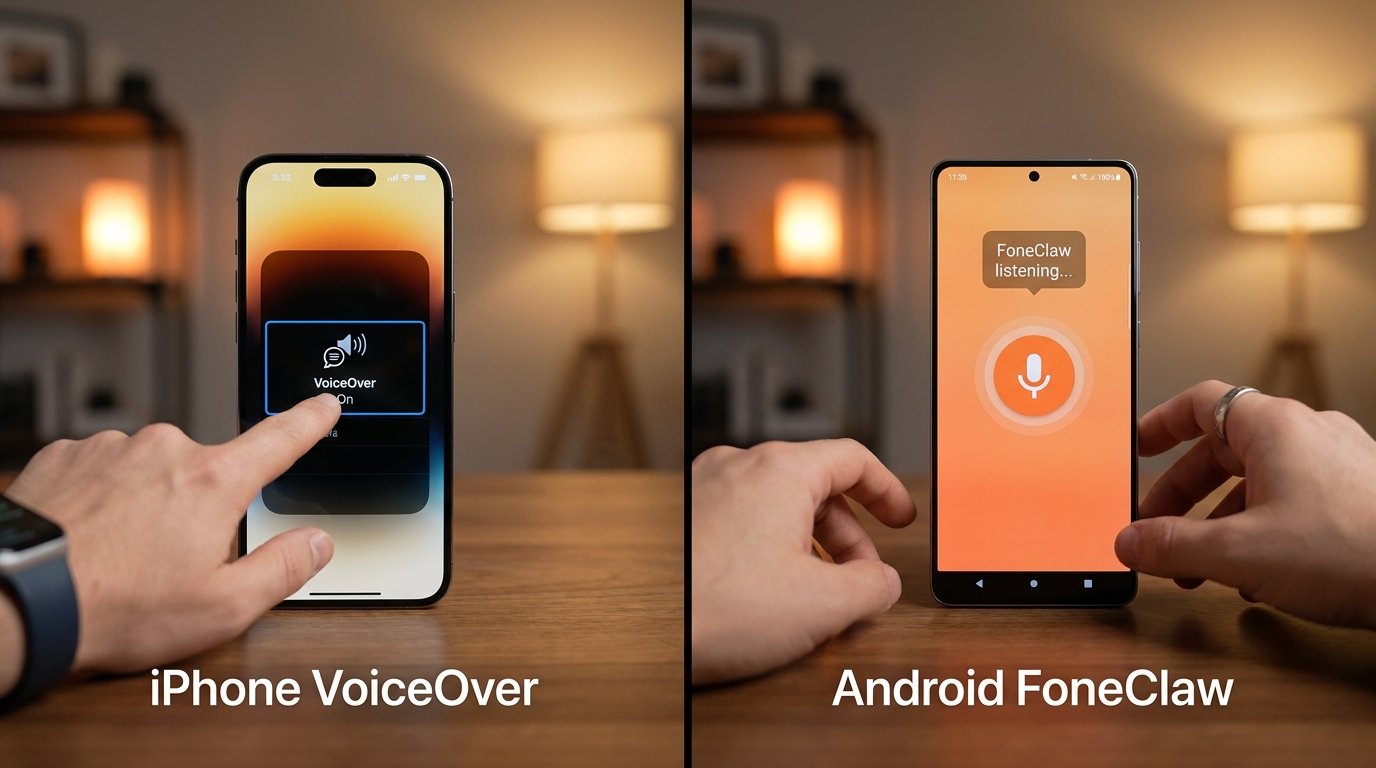
- FoneClaw is an Android AI agent for supported phone actions, not just a chatbot.
- Introduction
- Apple Intelligence Accessibility Features
- FoneClaw: The Android Accessibility Alternative
- Apple Intelligence vs FoneClaw: Accessibility Comparison
Introduction
Apple recently announced a major set of accessibility updates powered by Apple Intelligence, including VoiceOver Image Explorer, Magnifier AI descriptions, and eye-controlled wheelchair support for Vision Pro. These features are designed to make Apple devices more useful for users with visual, hearing, mobility, and learning disabilities.
However, these Apple Intelligence accessibility features are only available on Apple devices. If you use an Android phone, you might wonder if there is an alternative that provides similar AI-powered accessibility capabilities. FoneClaw offers a compelling Android alternative that brings AI voice control to any Android device.
This guide compares Apple Intelligence accessibility features with FoneClaw, helping you understand which solution works best for your specific accessibility needs on Android vs iOS.
Apple Intelligence Accessibility Features
Apple Intelligence accessibility features focus on helping users with disabilities interact with their devices more easily. VoiceOver Image Explorer provides detailed descriptions of photos, scanned documents, bills, and other visual content. Users can ask follow-up questions about what the camera sees through the iPhone Action button.
Magnifier is also getting AI-powered visual descriptions and voice controls. Users can ask spoken commands such as zoom in or turn on flashlight while using the feature. Apple is also improving Voice Control with natural-language interactions, allowing users to describe what they see on screen with phrases like tap the purple folder.
Vision Pro gains eye-controlled wheelchair support, allowing users with compatible alternative drive systems to control power wheelchairs using eye-tracking. The feature initially supports Tolt and LUCI systems in the US. These updates underscore Apple commitment to making technology accessible to everyone.
FoneClaw: The Android Accessibility Alternative
FoneClaw provides AI-powered voice control that works across all Android apps, making it a viable accessibility alternative for Android users. Unlike Apple Intelligence which is limited to Apple ecosystem, FoneClaw can control WhatsApp, Telegram, Instagram, TikTok, and any other app on your Android phone.
The platform features advanced voice control that lets you interact with your phone using natural language. You can speak commands like Send a message to John or Open my email and reply to the last message, and FoneClaw executes these tasks immediately. this voice assistant capability is particularly valuable for users with mobility disabilities who cannot easily touch their phone screen.
FoneClaw keeps supported phone-control workflows local by default where possible, providing strong privacy protection. Your personal data never leaves your phone, which is especially important for users who handle sensitive information like banking apps or private medical records.
Apple Intelligence vs FoneClaw: Accessibility Comparison
The primary difference between Apple Intelligence accessibility and FoneClaw lies in their platform and scope. Apple Intelligence is designed specifically for Apple ecosystem and focuses on specialized accessibility features. FoneClaw is designed for Android and provides general-purpose voice control that can benefit users with various disabilities.
Apple Intelligence accessibility features are most valuable for users with specific disabilities like blindness, low vision, or mobility impairments. Features like VoiceOver Image Explorer and eye-controlled wheelchair support are highly specialized. FoneClaw is most valuable for users who want general voice control to operate their phone hands-free.
the target audience is different. Apple Intelligence accessibility targets users with diagnosed disabilities. FoneClaw targets anyone who wants voice control, including users with temporary limitations like driving, cooking, or working with dirty hands.
Which is Better for Your Accessibility Needs?
Choosing between Apple Intelligence accessibility and FoneClaw depends on your device, specific disability, and needs. If you use an iPhone and have a visual or mobility disability, Apple Intelligence is the clear choice. It provides specialized features like VoiceOver Image Explorer and eye-controlled wheelchair support.
If you use an Android phone and want general voice control for accessibility, FoneClaw is the better option. It works across all Android apps and provides more flexibility than Google built-in accessibility features. FoneClaw is particularly useful for users with mobility disabilities who need hands-free phone control.
For users who switch between devices, FoneClaw offers cross-platform consistency. You can use the same voice commands on different Android phones, while Apple Intelligence features may vary between iPhone, iPad, and Mac.
FoneClaw Accessibility Advantages
FoneClaw offers several key accessibility advantages over Apple Intelligence. First, it works across all Android apps, not just Apple built-in apps. This means you can control WhatsApp, Telegram, Instagram, and any other app using voice commands, which is valuable for users who need hands-free access to third-party apps.
Second, FoneClaw keeps supported phone-control workflows local by default where possible. Your personal data never leaves your phone, providing stronger privacy protection. This is particularly important for users who handle sensitive medical or financial information.
Third, FoneClaw supports local-first workflows for basic tasks. Whether you are in an airplane, subway, or area with poor connectivity, your voice control continues to function. This reliability makes it a trustworthy accessibility tool for users who depend on voice control daily.