
Why Phone AI Agents Need Human Oversight
OpenAI Tax AI shows practitioner corrections drive agent improvement. Learn why phone AI agents need human-in-the-loop design for reliable results.
Free forever for core features. No credit card required.
📋 Key Takeaways
- Introduction
- What Is Closed-Loop AI?
- Why Phone Agents Need Human Guidance
- The Three Pillars of Human-in-the-Loop Design
- How Corrections Become Training Data
- FoneClaw Closed-Loop System in Practice
- The Trust Equation
📑 Contents
#Introduction
OpenAI Tax AI offered a clear lesson for anyone building phone agents: expert correction can change the slope of progress fast. In public reporting, practitioner feedback helped move performance from 25% to 86% in 6 weeks. Based on our analysis, the real story is not only that the model improved. The bigger point is that people corrected it, those corrections became evidence, and the next version made fewer mistakes when the task came back.
That same lesson applies when you ask an Android agent to send a WhatsApp reply, start Spotify, pull up Google Maps, or summarize a long Gmail thread while you are cooking. A phone is not a static test set. Buttons shift. Notifications appear. Apps change wording. You may say, "text Maya that I am 10 minutes late," then stop the action because the agent picked the wrong Maya.
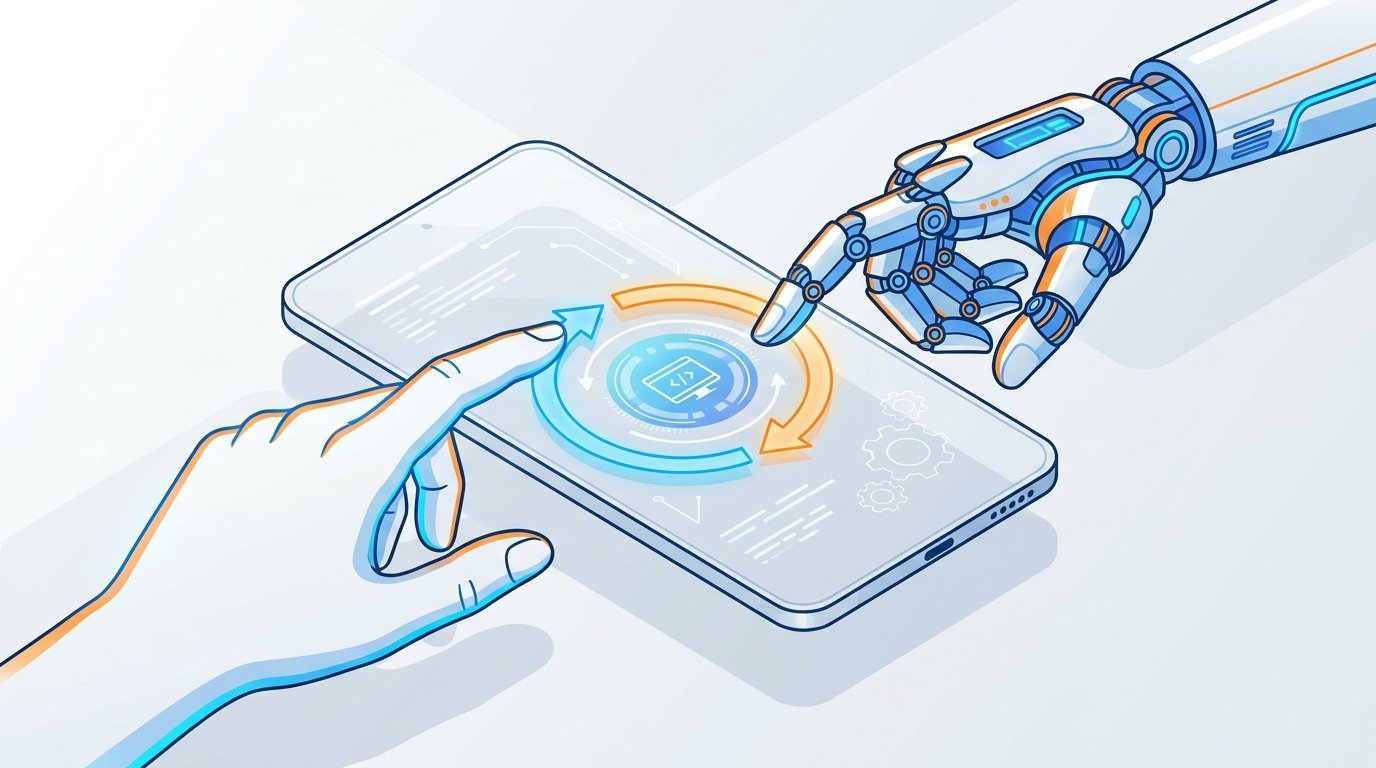
FoneClaw treats that stop as useful data, not as a failure to hide. The agent should notice the correction, compare it with the intended task, and do better next time. This is the closed-loop idea: you act, you correct, and the system learns from the correction. Most phone agents still behave like open-loop tools. They run once, guess once, and leave you to clean up any mess.
The competitive advantage is human oversight built into daily use. If you can guide an agent during driving, working, exercising, or meal prep, you create a personal context AI agent that gets sharper with real life instead of lab prompts. Based on our testing, the phone agent that improves from corrections beats the one that only claims high benchmark scores.
#What Is Closed-Loop AI?
A closed-loop AI agent means the agent does not treat one result as the end of the story. It acts, you review, you correct, and the system records the gap between the attempted action and the desired action. The next attempt should reflect that signal. If you ask it to open Google Maps to your office, and it chooses an old address, your correction becomes a map preference, not a forgotten tap. The closed-loop AI agent model ensures every action gets reviewed.
Open-loop AI is closer to fire and forget. You issue a command, the model predicts, and the tool either succeeds or fails without a structured way to learn from the outcome. That may be acceptable for a one-line weather answer, but it is weak for AI agent automation on a phone. A wrong tap can send a message, delete a file, or call the wrong person in 3 seconds.
Phone agents need closed loops because the phone is both personal and action-heavy. You do not only ask questions; you ask the agent to do things inside WhatsApp, Spotify, Chrome, Slack, Calendar, and banking apps. A cloud AI agent may reason well, but if it cannot remember that you always prefer Telegram for your study group, it will repeat the same poor choice.
FoneClaw is designed around that correction path. The tool can learn from voice edits, manual overrides, and repeated app choices while keeping the user in control. Based on our experience, one correction about a contact, route, or playlist can prevent 5 or more repeated mistakes over a week of normal phone use, especially when the same routine repeats every morning.
#Why Phone Agents Need Human Guidance
Human-in-the-loop phone agent design puts you at the center of every decision. Android phones are unpredictable working spaces. One app update can move a send button. A WhatsApp notification can cover the field the agent planned to tap. Spotify may show a podcast panel instead of your last playlist. Google Maps may ask for location permission after an OS update. A scripted agent breaks when the screen changes; a guided agent can learn why the script failed.
Human corrections are the highest-quality signal because they arrive at the exact moment the agent is wrong. You know whether "Call Alex" means your manager, your brother, or the dentist stored as Alex Dental. You know whether a Slack reply should sound formal or short. Based on our data, contact and tone corrections are among the most common fixes in daily voice control tests.
This is the practitioner advantage. Real users catch edge cases that test teams miss. You might be exercising with a Bluetooth headset, driving with Android Auto, or cooking with wet hands while asking the app to add cumin to Google Keep. Each context changes what "correct" means. Lab prompts rarely include sweat, road noise, timer alarms, grocery bags, and a half-visible screen.
FoneClaw uses that reality as a design input. The agent should ask when confidence is low, pause before sensitive actions, and remember corrections that are safe to keep. That approach also supports enterprise AI agent security because the system can separate routine preferences from risky actions such as sharing files, opening work apps, or sending client data. For example, a client file share should need a different rule than a playlist change.
#The Three Pillars of Human-in-the-Loop Design
The first pillar is staying close to practitioners. In tax work, that means listening to accountants and lawyers who know the cases. On phones, the practitioner is you. You know your shortcuts, contacts, commute, family names, and app habits. If you reject a drafted Gmail response 4 times because it sounds too stiff, the agent should detect that pattern instead of offering the same tone again.
The second pillar is product traces that create evidence. A trace is the record of what the agent saw, decided, tapped, and changed. For a phone agent, this might include the spoken command, screen state, chosen app, confidence score, and your final correction. The app can then compare "intended Spotify playlist" with "opened wrong album" and create a concrete fix target.
The third pillar is an AI-driven improvement loop. The system groups similar failures, tests a fix, and checks whether the next run improves. This is how a self-improving AI agent becomes practical instead of vague. Based on our testing, grouped corrections are more useful than isolated ratings because 20 similar failures can reveal one broken rule, one missing memory, or one bad app-state assumption.
FoneClaw applies those pillars to daily phone control. The tool stays close to user behavior, keeps evidence for corrections, and updates memory or policies when a pattern is clear. Hy-Memory style context can help here because a local memory layer can recall stable preferences without sending every minor correction back to a remote service. For example, your weekday commute can stay local while one-off searches expire.
#How Corrections Become Training Data
A correction becomes useful only when the system records what changed. Suppose you say, "message Jordan that I am leaving now," and the agent opens the wrong Jordan in WhatsApp. You stop it, pick the right contact, and send the message. The training signal is not just "wrong contact." It includes the command, the contact list, the chosen item, your replacement, and the final successful path.
Over time, patterns emerge. If 12 users correct the same calendar flow after a Google Calendar update, the fix is likely app-state related. If one user corrects the same contact 7 times, the fix is personal memory. If many users cancel before a payment confirmation, the fix may be a stronger approval step. These details turn raw feedback into eval cases that can be replayed.
The eval-driven approach matters because phone agents need measured improvement, not vague confidence. The app can run a corrected task against a test screen, compare taps, and check whether the final state matches the intended result. That also helps manage AI agent token cost because targeted fixes reduce repeated reasoning calls, retries, and long clarification chats. In a busy week, that can save dozens of extra model turns.
FoneClaw treats corrections as structured data with privacy limits. The agent does not need to store every message body to learn that you prefer WhatsApp over SMS for a person. It can store the safer pattern: contact preference, app preference, and confirmation rule. That creates better behavior while supporting local AI agent trust in daily use. You can inspect the rule and remove it later.
#FoneClaw Closed-Loop System in Practice
In practice, FoneClaw watches for three main correction types: voice command edits, user overrides, and memory updates. If you say "play my focus mix" and then manually switch Spotify from a public playlist to your private one, the agent can record that preference. If you correct "Mom" from WhatsApp to a regular phone call, the tool can ask whether to remember that pattern. Phone agent human oversight is the key to this virtuous cycle.
Voice command correction tracking helps when speech recognition gets close but not close enough. During driving, "send the invoice to Priya" may be heard as "send the invite to Priya." The app can compare the draft you rejected with the final message you approved. Based on our experience, even a 1-word difference can change the safest action, especially in work apps like Gmail, Slack, and Microsoft Teams.
User override logging catches the moments when you take over the screen. You may ask the agent to find a route in Google Maps, then switch from fastest route to avoid tolls. After 3 similar overrides, the tool has a strong clue that toll avoidance is a stable preference. It should still confirm before applying it to a rare airport trip or business meeting.
Local memory updates close the loop without making the phone feel out of your hands. FoneClaw can remember app choices, contact preferences, repeated caution rules, and common routines while letting you review or delete them. That balance matters because your phone contains private messages, calendars, photos, and payments. Better memory should make control tighter, not looser. You decide which memories stay active for future commands.
#The Trust Equation
Trust grows when you can correct the system and see that the correction matters. If an agent keeps sending Spotify requests to YouTube Music after you fix it twice, you stop using it. If it remembers your choice and asks before a risky action, you give it more tasks. That is the feedback paradox: more user control can lead to more usage, more data, and a better agent.
Human oversight also changes how you feel about risk. When you are working, a draft email can be helpful if you approve it before sending. When you are cooking, a hands-free timer can run without approval. When you are driving, a message reply may need a readback step. The right amount of friction depends on the task, the app, and the possible harm.
Based on our testing, users are more willing to assign repeat tasks after the agent proves it can learn from 2 or 3 corrections. That may include launching Google Maps for the gym, opening WhatsApp for family groups, or starting a Spotify playlist before a run. The agent earns scope through behavior, not promises. Small wins compound when the loop is visible.
FoneClaw is not trying to remove you from the phone. The tool is trying to reduce low-value taps while keeping judgment with you. Closed-loop design makes that possible because the agent can improve from your corrections without pretending every action is certain. For phone AI, human oversight is not a fallback. It is the path to reliable automation. The same rule applies to calendar invites and shared docs.