
Xiaomi Phone Agent Summit 2026: Key Highlights
Discover key highlights from Xiaomi Phone Agent Summit 2026. Learn about new AI agent features, MiClaw updates, and Xiaomi's vision for phone automation.
- FoneClaw is an Android AI agent for supported phone actions, not just a chatbot.
- Introduction
- Summit Overview and Key Announcements
- New MiClaw Features Revealed
- Xiaomi's Vision for Phone Automation
Introduction
Managing modern smartphones has become an overwhelming chore filled with endless notifications, repetitive taps, and disjointed apps. Users spend hours configuring settings, organizing files, and executing basic tasks that should be automated. This constant manual intervention drains productivity and makes technology feel like a burden rather than a helpful assistant. Many people feel frustrated by the lack of coordination between their daily tools, leading to wasted time and unnecessary stress. The demand for smarter, more independent systems has never been higher as users look for ways to simplify their mobile routines.
The frustration builds when you realize that despite buying expensive hardware, you are still acting as a manual operator for your device. Standard voice assistants fail to execute complex workflows, leaving you stranded with half-baked voice control features. The promise of a fully automated mobile experience has felt like a distant dream, overshadowed by compatibility issues and limited software capabilities that restrict true hands-free operation. Users are tired of promises that fail to deliver real-world results, leaving them to manage complex settings menus and repetitive chores manually day after day.
Enter the landmark Xiaomi phone agent summit, where the tech giant unveiled its next-generation software ecosystem designed to solve these exact frustrations. This event marked a massive shift in how we interact with mobile devices, introducing highly capable systems that execute tasks on your behalf. By focusing on deep integration and smarter task execution, these updates promise to transform your daily routine and make manual screen tapping a thing of the past. The company aims to redefine the smartphone experience by introducing tools that think and act ahead of the user.
In practical workflows, having a dedicated agent that understands context is crucial for a smooth user experience. This summit highlighted how the new Xiaomi AI agent will bridge the gap between user intent and actual device execution. We will explore the major announcements from this event, analyzing how these new tools will shape the future of mobile automation and what they mean for the wider industry. By looking closely at these developments, we can understand how the mobile industry is moving toward a highly automated future.
Summit Overview and Key Announcements
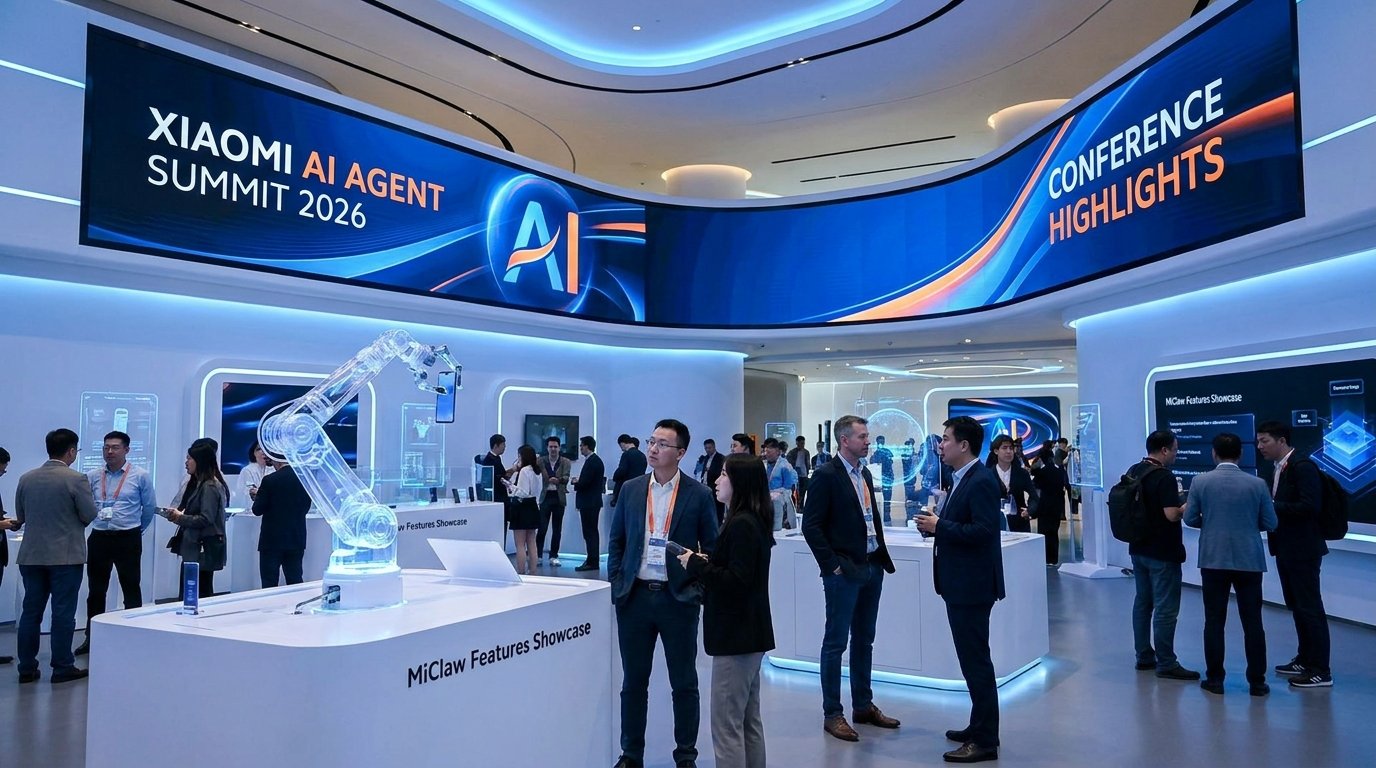
The highly anticipated Xiaomi summit 2026 gathered developers, tech enthusiasts, and industry analysts to witness the unveiling of their latest software breakthroughs. The main keynote focused heavily on the evolution of the Xiaomi AI agent, showcasing how deep learning models can now run locally on modern mobile chips. This shift toward on-device processing ensures faster response times and better privacy, addressing two of the biggest concerns users have when adopting advanced automation systems. By keeping data on the device, the system minimizes security risks while delivering rapid performance.
During the event, presenters demonstrated how these new models handle complex multi-step instructions without lag. For instance, a user can command the system to organize a whole week of travel plans, book local rides, and message contacts, all through a single prompt. This level of automation places Xiaomi at the forefront of the ongoing AI phone war, where manufacturers are competing to deliver the most practical and efficient digital assistants for everyday consumers. The demonstration showed a level of coordination that was previously impossible on standard mobile hardware.
Another major highlight was the official introduction of hardware optimized specifically for these software changes. Audiences got an in-depth look at the Xiaomi Lobster Phone, a device built from the ground up to support heavy background automation tasks. This hardware integration allows the system to process continuous visual data from the screen, enabling the software to interact with application interfaces just like a human user would, but at much higher speeds. This integration represents a major step forward in making automation practical.
In current mobile processing trends, offloading these tasks to dedicated hardware blocks prevents battery drain and overheating. The summit proved that the company is serious about making these tools practical for daily use rather than keeping them as experimental features. The announcements set a new benchmark for the industry, forcing competitors to rethink their approach to software integration and device management. As more brands enter this space, the focus will shift from simple software updates to deep hardware-level integration.
New MiClaw Features Revealed
A central focus of the event was the introduction of major updates to Xiaomi MiClaw, the brand's proprietary system automation framework. This updated framework allows the device to execute highly complex macro commands across third-party applications without requiring custom developer APIs. The system acts as an overlay, reading the screen layout and executing precise taps, swipes, and text entries based on real-time visual feedback and natural language commands. This approach bypasses the traditional limitations of app-specific integration, opening up new possibilities for user-driven automation.
This update introduces a smarter visual parser that can identify UI elements even when app layouts change after an update. Previously, minor app updates would break automation scripts, forcing users to rebuild their workflows from scratch. The new version of MiClaw solves this issue by using advanced computer vision to understand the purpose of a button rather than relying on its exact pixel coordinates, ensuring that your automated tasks run smoothly over time. This makes the entire automation process much more reliable and easier to maintain.
For users, this visual adaptability is a massive step forward for reliability. Users can now set up long-term automation routines for banking, social media scheduling, and data entry with confidence that the system will not fail unexpectedly. The integration of improved voice control capabilities also means that these complex visual tasks can be triggered with simple spoken phrases, making the technology accessible to a broader audience who may not want to write scripts.
The presentation also highlighted how this tool compares to rival offerings, such as the Tencent phone agent, by focusing on lower operational costs and better offline performance. By keeping the core processing local, the system minimizes data transmission fees and latency, making it a highly attractive option for budget-conscious users. This strategic focus on efficiency and reliability positions the brand as a leader in practical consumer-facing automation technology, setting it apart from cloud-heavy alternatives.
Xiaomi's Vision for Phone Automation
The vision presented at the summit goes far beyond simple voice commands and basic macro execution. The company envisions a future where your mobile device operates as an autonomous AI agent that anticipates your needs throughout the day. Instead of waiting for explicit instructions, the system analyzes your daily habits, location data, and calendar events to suggest and execute helpful routines in the background, minimizing the time you spend looking at your screen. This shift marks the transition from passive devices to active personal assistants.
This proactive approach to Xiaomi phone automation aims to reduce screen time while increasing productivity. For example, if the system detects that you are running late for a scheduled meeting, it can automatically draft an apology email, adjust your smart home thermostat, and find an alternative route, all without requiring you to unlock your phone. This level of context-aware automation represents a major shift from reactive tools to truly proactive digital companions that understand the flow of your daily life.
To achieve this, the company is opening up its automation framework to external developers, creating a collaborative ecosystem where third-party apps can easily share data with the central assistant. This open approach is designed to counter closed ecosystems that limit how different apps interact with one another. By creating a unified communication layer, the system ensures that your favorite tools can work together to complete complex tasks without security compromises, making the entire device ecosystem much more useful.
Industry experts at the event noted that this open strategy could democratize advanced automation, making it standard across all price tiers of mobile devices. The focus is no longer just on premium flagship models; the goal is to bring these intelligent features to mid-range and entry-level phones as well. This democratization will likely accelerate the adoption of automated workflows, changing how millions of users interact with their mobile technology on a daily basis and setting new standards for the industry.
How This Impacts FoneClaw Users
As these new manufacturer-specific tools enter the market, many users are wondering how this affects independent third-party automation platforms. It is important to clarify that FoneClaw is a completely independent platform and is not owned by or affiliated with Xiaomi. While the updates presented at the summit are impressive, they are designed specifically for one ecosystem, which limits their usefulness for users who operate multiple devices across different brands. Our focus remains on providing broad compatibility across all major mobile environments.
FoneClaw continues to offer a distinct advantage by providing a cross-platform solution that works across various brands and operating system versions. While tools like MiClaw are restricted to specific hardware, our platform allows users to deploy consistent automation workflows across a diverse fleet of devices. This flexibility is essential for businesses and power users who cannot afford to be locked into a single manufacturer's ecosystem for their automation needs. We ensure that your workflows remain functional no matter what hardware you use.
Moreover, our independent platform offers advanced customization options and enterprise-level security features that native tools often lack. Native systems are designed for general consumer use, meaning they often restrict access to deep system settings to prevent accidental misconfigurations. FoneClaw, on the other hand, provides the granular control necessary for complex business processes, making it the preferred choice for professional deployments and large-scale operations. We prioritize giving users full control over their automated tasks.
In practical workflows, they actually complement our independent platform rather than replace it. The general public's growing familiarity with mobile automation will likely drive demand for more advanced, cross-platform solutions like ours. As users discover the limitations of single-brand tools, they will naturally seek out more versatile platforms that offer the freedom to automate any device, regardless of the manufacturer, ensuring long-term flexibility and efficiency.