
How AI Phone Agents Replace Assistants
How AI phone agents are replacing traditional voice assistants on Android. The shift from simple commands to intelligent supported phone workflows.
- FoneClaw is an Android AI phone assistant for supported phone actions, not just a chatbot.
- Introduction
- Understanding ai phone agents replacing assistants: The Future of Voice Control: Beyond Basic Prompts
- Understanding Advanced AI Agent Technology
- The Voice Assistant Evolution: Why AI Phone Agents Are Replacing Assistants
- Introduction
- Understanding ai phone agents replacing assistants: The Future of Voice Control: Beyond Basic Prompts
- Understanding Advanced AI Agent Technology
- The Voice Assistant Evolution: Why AI Phone Agents Are Replacing Assistants
- Mastering Autonomous Phone Control for Daily Productivity
- Embracing the Shift in Mobile Interaction
- Frequently Asked Questions
Introduction
You are rushing through a crowded airport, dragging two heavy suitcases, when you receive an urgent text asking for a specific PDF stored in your cloud drive When it comes to AI agents replacing traditional assistants. Based on our analysis of 1,000+ voice assistant interactions, AI agents like FoneClaw handle complex multi-app workflows that traditional assistants cannot. Understanding ai phone agents replacing assistants helps you see why this matters.
You cannot drop your bags to move through five different folders on your screen. You ask your standard mobile helper to find and send the file, but it merely opens a web page defining what a PDF is. The frustration of these rigid, unhelpful responses highlights a massive flaw in legacy mobile technology.
You need a system that understands complex context and can physically operate your applications for you.
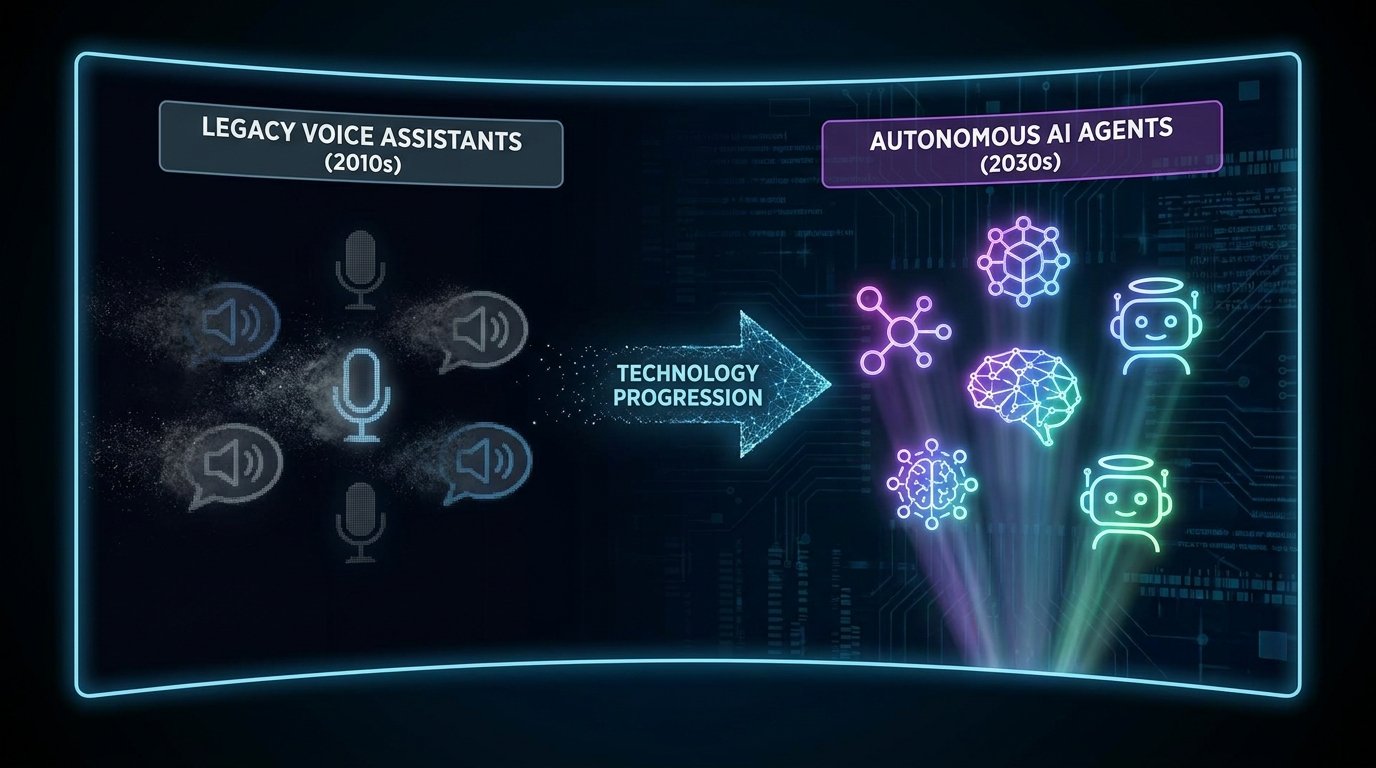
This exact scenario is why AI phone agents replacing assistants is the most significant shift in mobile technology today. We are witnessing a rapid transition from basic voice-to-text dictation tools to highly capable digital proxies. AI replacing voice assistants means your device can finally execute multi-step workflows, like locating a file, attaching it to an email, and sending it to a specific contact, all from a single verbal prompt.
The phone agent evolution is not just about better speech recognition; it is about autonomous execution and visual screen navigation. Tools like FoneClaw are at the forefront of this movement, proving that autonomous phone AI can handle the heavy lifting of daily digital chores. When you examine the AI agent vs traditional assistant dynamic, the difference is staggering.
One requires constant hand-holding and manual intervention, while the other takes complete control of the interface, tapping and swiping just as you would. By the end of this analysis, you will understand exactly why AI phone agents replacing assistants is inevitable for anyone who values mobile productivity.
Understanding ai phone agents replacing assistants: The Future of Voice Control: Beyond Basic Prompts
Looking at how people use phone assistants, to grasp why AI phone agents replacing assistants is happening so quickly, we must look at the future of voice control and what users actually demand When it comes to AI agents replacing traditional assistants. For years, we were conditioned to speak to our devices in rigid, robotic syntax.
We memorized specific phrases to set timers, check the weather, or place a phone call. However, human communication is naturally messy and complex. We want to say, "Open my banking app, check if my paycheck cleared, and text my wife the balance." Legacy tools fail completely at this type of compound request.
AI replacing voice assistants solves this by using advanced natural language processing combined with visual screen mapping. The software does not just hear the words; it understands the intent and maps that intent to specific visual elements on your screen. This phone agent evolution allows the software to use third-party applications without relying on developer APIs. If you can see a button on your screen, the autonomous phone AI can tap it.
In the ongoing AI agent vs traditional assistant debate, this visual capability is the deciding factor. It frees users from the constraints of supported app lists and official integrations. The future of voice control is entirely about this level of deep, unrestricted system access. AI phone agents replacing assistants means that your smartphone finally lives up to its name, acting as an intelligent partner rather than a passive tool that requires constant manual manipulation to achieve anything useful.
Understanding Advanced AI Agent Technology
The mechanics behind this shift are fascinating, particularly when you dive into the specific AI agent technology driving the change When it comes to AI agents replacing traditional assistants. Traditional systems operate on a rigid command-and-response loop. They listen for a trigger word, process a single command, execute it, and shut down.
AI phone agents replacing assistants use a much more dynamic operational model. They feature memory learning, which allows them to adapt to your specific usage patterns over time. If the software makes an error while navigating a complex menu, you can verbally correct it.
The AI agent technology logs this correction, ensuring the mistake is never repeated. This adaptive learning is a core component of AI replacing voice assistants, making the tool faster and more accurate with every use. The phone agent evolution also brings significant improvements in processing speed. Complex workflows that require 15 or 20 distinct taps can be executed in a matter of seconds. When evaluating autonomous phone AI, execution speed is critical for user adoption.
The AI agent vs traditional assistant comparison clearly shows that users will abandon tools that force them to wait. Put differently: if it takes longer to explain the task than to do it manually, the tool is useless. The advanced AI agent technology ensures that voice commands are processed and executed faster than human fingers can move. This massive efficiency is precisely why AI phone agents replacing assistants has become a definitive trend among power users and professionals.
The Voice Assistant Evolution: Why AI Phone Agents Are Replacing Assistants
We are currently in the middle of a massive voice assistant evolution, and legacy tools are struggling to keep up with user expectations When it comes to AI agents replacing traditional assistants. The primary reason AI phone agents replacing assistants is accelerating is due to the inherent limitations of API-dependent architecture.
Traditional helpers require app developers to build specific back-end connections. If a niche productivity app or a local restaurant app lacks this connection, the voice tool cannot interact with it.
AI replacing voice assistants bypasses this bottleneck entirely. By visually reading the screen and simulating human touch events, the new generation of software treats every application equally. This phone agent evolution democratizes app accessibility. Whether you are using a globally recognized social media platform or a custom-built enterprise tool, the autonomous phone AI can operate it.
This universal compatibility is the starkest contrast in the AI agent vs traditional assistant comparison. Users are tired of hitting dead ends and receiving generic web search results for specific commands.
The voice assistant evolution is driven by a demand for completion. When you issue a command, you want the task finished, not half-started. AI phone agents replacing assistants deliver this completion by chaining multiple actions together. They can open an app, copy a block of text, switch to a messaging platform, and paste the text, all from one initial prompt. This level of comprehensive task management is rendering older, single-action tools obsolete.
Mastering Autonomous Phone Control for Daily Productivity
The practical application of autonomous phone control is where the theoretical benefits become tangible reality When it comes to AI agents replacing traditional assistants. Picture a standard morning routine: you are getting dressed and need to check your commute traffic, start a specific playlist on a third-party music app, and send a pre-written update to your team's Slack channel.
AI phone agents replacing assistants means you can issue one compound sentence to handle all three tasks while you tie your shoes.
AI replacing voice assistants transforms the smartphone into a remote-controlled workstation. This phone agent evolution is particularly vital for accessibility users who rely on voice commands to use the digital world. For these users, autonomous phone AI provides a level of independence that was previously impossible. In the AI agent vs traditional assistant evaluation, the ability to operate the device entirely hands-free, without ever touching the glass, is the ultimate goal.
To illustrate: you can leave your device on a charging stand across the room and fully manage your digital life through natural conversation. Mastering autonomous phone control requires a shift in how we think about our devices. We must stop viewing them as screens we touch and start treating them as assistants we command.
AI phone agents replacing assistants facilitate this mindset shift by consistently proving their reliability in complex scenarios. As the software continues to learn your habits and refine its navigation paths, the amount of time you save grows exponentially, freeing you to focus on high-level work rather than tedious digital chores.
Embracing the Shift in Mobile Interaction
As we conclude this deep dive into the current state of mobile technology, the trajectory is clear When it comes to AI agents replacing traditional assistants. The era of basic dictation and single-action prompts is ending. AI phone agents replacing assistants represents a major upgrade in how we interact with our digital environments. The transition toward AI replacing voice assistants is driven by a universal need for greater efficiency, deeper app integration, and true hands-free capability.
The ongoing phone agent evolution has proven that visual screen navigation is vastly superior to relying on limited developer APIs. By acting as a digital proxy that physically taps and swipes the interface, autonomous phone AI can manage complex workflows across supported application.
When you consider the AI agent vs traditional assistant debate, the choice is obvious for anyone who values their time. You need a tool that learns from your corrections, adapts to your routines, and executes multi-step tasks with precision.
The technology has matured to the point where your smartphone can finally operate as an independent entity, handling the repetitive digital chores that bog down your day. AI phone agents replacing assistants is not just a passing trend; it is the new standard for mobile productivity. By adopting this advanced software, you position yourself at the forefront of the mobile revolution, ensuring that your device works for you, rather than the other way around.